
Uncategorized
Factors That Influence Live Rosin Quality: A Complete Guide
Jul
Factors That Influence Live Rosin Quality
As live rosin has become one of the most recognised solventless cannabis concentrates, many people wonder what separates an average product from one regarded as high quality. While appearance and aroma are often the first characteristics people notice, the overall quality of live rosin is determined by a combination of factors that begin long before extraction.
From cannabis genetics and cultivation practices to harvesting, freezing, extraction, and storage, every stage of production can influence the characteristics of the final concentrate. Even small differences during processing may affect terpene preservation, consistency, texture, and overall stability.
Understanding these factors provides valuable insight into why live rosin is often considered a premium concentrate and why careful production techniques are essential for achieving consistent results.
Whether you’re new to solventless concentrates or simply interested in learning more about cannabis extraction, this guide explores the major factors that influence live rosin quality.
What Is Live Rosin? Complete Beginner’s Guide >>>
What Is Live Rosin?
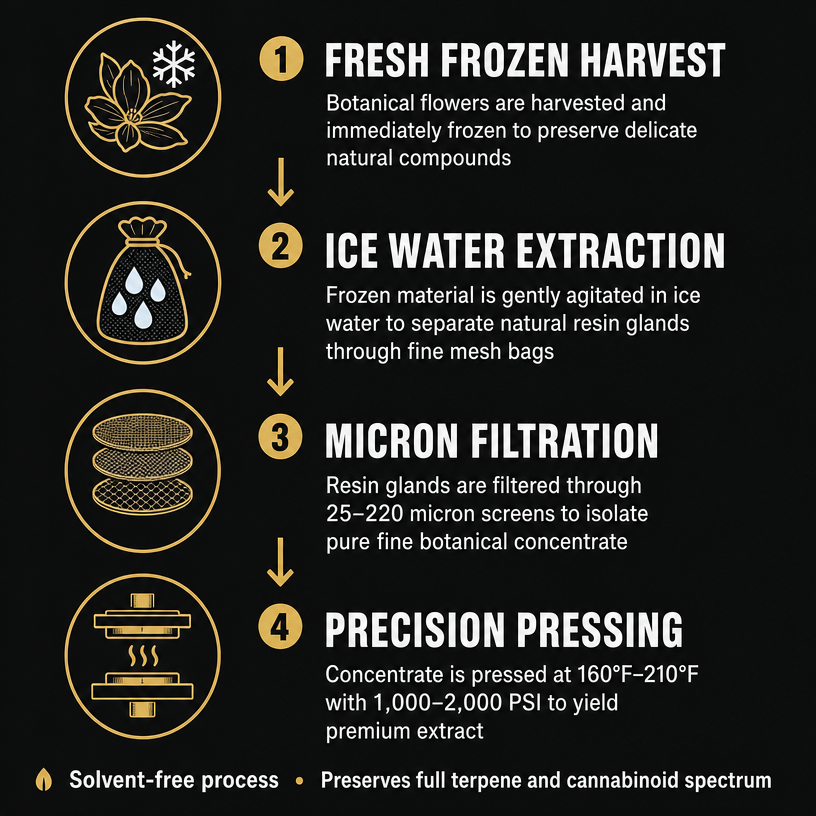
Live rosin is a solventless cannabis concentrate produced by pressing high-quality bubble hash made from freshly frozen cannabis. Unlike solvent-based extraction methods, live rosin relies on mechanical separation, heat, and pressure to collect the plant’s resin.
Because there are relatively few processing steps compared with some extraction methods, the quality of the starting material plays a particularly important role in determining the characteristics of the finished concentrate.
How Live Rosin Is Made From Fresh Frozen Cannabis >>>
Why Quality Starts Before Extraction
One of the biggest misconceptions is that quality is created during pressing alone.
In reality, the extraction process can only preserve or reveal the qualities already present in the cannabis plant. If the starting material is poor, even the most advanced equipment cannot produce exceptional live rosin.
For this reason, many producers place significant emphasis on cultivation, harvest timing, and careful handling before extraction even begins.
Cannabis Genetics
The genetic profile of a cannabis cultivar is one of the most important factors influencing live rosin quality.
Different cultivars naturally produce varying amounts of resin, cannabinoids, and aromatic compounds.
Genetics can influence:
- Resin production
- Trichome density
- Terpene composition
- Cannabinoid profile
- Plant structure
Cultivars known for abundant resin production are generally more suitable for solventless extraction because they provide greater quantities of trichomes for processing.
Trichome Development
Trichomes are tiny resin glands found on cannabis flowers.
They contain many of the compounds concentrated during live rosin production, including cannabinoids and terpenes.
Healthy trichomes contribute to:
- Better resin collection
- Improved terpene preservation
- Cleaner extraction
- Greater overall consistency
Growers often monitor trichome maturity closely to determine the most appropriate harvest window.
Harvest Timing
Harvest timing can significantly affect concentrate quality.
Harvesting too early or too late may influence the chemical composition of the resin.
When harvested at an appropriate stage of maturity, cannabis plants may offer:
- Better resin development
- Balanced cannabinoid profiles
- Well-developed terpene content
Careful timing helps establish a strong foundation for solventless extraction.
Fresh Frozen Cannabis
One of the defining characteristics of live rosin is the use of fresh frozen cannabis.
Immediately freezing freshly harvested plants helps preserve delicate aromatic compounds that may change during drying and curing.
Potential benefits of fresh freezing include:
- Better terpene retention
- Preservation of volatile compounds
- Reduced degradation before extraction
- Improved aroma characteristics
This stage plays an important role in producing live rosin with distinctive flavour and aroma profiles.
Bubble Hash Quality
Before live rosin is pressed, producers first create bubble hash through ice water extraction.
The quality of this bubble hash has a direct impact on the finished concentrate.
Factors influencing bubble hash quality include:
- Clean separation of trichomes
- Effective filtration
- Gentle handling
- Proper drying
High-quality bubble hash generally provides a better starting point for pressing.
Click here>>> to shop the best Rosin from our store
Water Quality During Extraction
Although often overlooked, clean water is important during the ice water extraction process.
Water quality may influence cleanliness and consistency throughout production.
Many professional processors use filtered or purified water to help maintain controlled extraction conditions.
Temperature Control
Temperature is carefully managed throughout multiple production stages.
Examples include:
During Freezing
Rapid freezing helps preserve fresh plant characteristics.
During Washing
Cold temperatures minimise unwanted plant material entering the resin collection process.
During Pressing
Controlled heat allows resin to flow while helping preserve delicate aromatic compounds.
Small changes in temperature can affect both yield and consistency.
Pressure During Rosin Pressing
Heat alone is not enough to produce live rosin.
Pressure also plays an important role.
The amount of pressure applied influences:
- Resin flow
- Extraction efficiency
- Texture
- Overall consistency
Finding the right balance is one of the skills involved in solventless extraction.
Terpene Preservation
Terpenes are aromatic compounds responsible for many of the distinctive scents associated with cannabis.
Examples include:
- Myrcene
- Limonene
- Pinene
- Caryophyllene
Maintaining terpene content requires careful handling throughout the production process.
Excessive heat or poor storage conditions may reduce the intensity of these aromatic compounds over time.
Moisture Content
Moisture levels influence several stages of production.
Excess moisture can affect drying and pressing, while overly dry material may produce different extraction characteristics.
Maintaining appropriate moisture levels contributes to consistency during processing.
Clean Production Practices
Clean equipment and careful handling are essential components of quality production.
Professional producers generally prioritise:
- Sanitised workspaces
- Clean filtration equipment
- Careful product handling
- Appropriate storage containers
Good manufacturing practices help maintain consistency from batch to batch.
Storage Conditions
Proper storage remains important even after live rosin has been produced.
To help preserve quality:
- Store in airtight containers.
- Keep away from direct sunlight.
- Avoid excessive heat.
- Follow manufacturer storage recommendations where provided.
Appropriate storage may help maintain texture, aroma, and overall stability.
Appearance Isn’t Everything
Many people assume colour alone determines quality.
While appearance can provide useful information, it should not be used as the only indicator.
Other characteristics are equally important, including:
- Aroma
- Texture
- Consistency
- Production methods
- Storage history
Quality is best assessed by considering the product as a whole.
Why Consistency Matters
Reliable production methods contribute to greater consistency between batches.
Consistency can be influenced by:
- Standardised harvesting
- Controlled processing
- Equipment calibration
- Skilled handling
Producers who follow consistent procedures are often better positioned to achieve predictable results.
Common Misconceptions About Live Rosin Quality
“The lightest colour is always the best.”
Colour can vary naturally depending on genetics, harvest timing, and processing methods.
“Higher price always means higher quality.”
Price may reflect labour, equipment, or limited production, but it is not a guarantee of quality.
“More aroma automatically means better live rosin.”
Aroma is only one aspect of overall quality and should be considered alongside other production factors.
Australian Considerations
Cannabis laws differ across Australia’s states and territories. Access to cannabis products, including concentrates, is subject to Australian regulations.
Anyone seeking information about cannabis products should refer to current laws and, where appropriate, consult qualified healthcare professionals regarding medical cannabis.
Frequently Asked Questions
What is the most important factor influencing live rosin quality?
Quality begins with the cannabis plant itself. Genetics, cultivation, harvest timing, and careful handling all contribute to the characteristics of the finished concentrate.
Why is fresh frozen cannabis used?
Fresh freezing helps preserve aromatic compounds and resin quality before extraction begins.
Does pressing temperature affect quality?
Yes. Controlled temperatures are important for balancing resin flow while preserving delicate compounds.
Why is bubble hash important?
Bubble hash serves as the starting material for live rosin, making its quality an important factor in the final concentrate.
Can poor storage affect live rosin?
Yes. Heat, light, air, and improper storage conditions may alter texture, aroma, and freshness over time.
Final Thoughts
Live rosin quality is influenced by every stage of production, from selecting the right cannabis genetics and harvesting at the appropriate time to preserving fresh frozen material, producing clean bubble hash, and carefully controlling heat and pressure during pressing.
Rather than relying on a single characteristic such as colour or price, understanding the full production process provides a more complete picture of what contributes to a well-made solventless concentrate.
If you’re interested in learning more about cannabis extraction and solventless concentrates, continue exploring our educational resources:
What Is Live Rosin? Complete Beginner’s Guide>>
Live Rosin vs Live Resin: What’s the Difference?>>
How Live Rosin Is Made From Fresh Frozen Cannabis>>
Cannabis Concentrates Explained>>

Pingback: How to Store Live Rosin Properly: A Complete Guide to Maintaining