
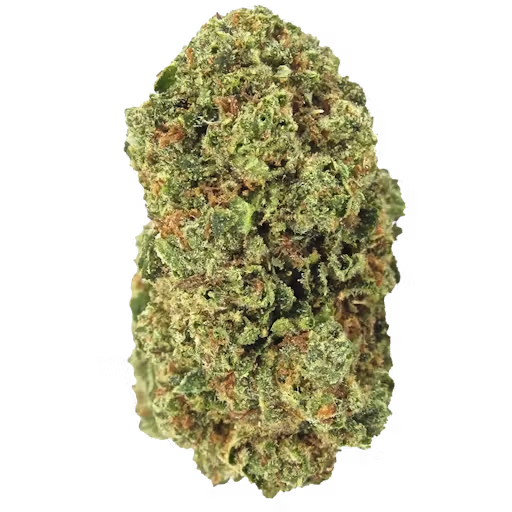
Fire OG Kush
Price range: $270.00 through $2,450.00
The Fire OG strain, also known as Fire OG Kush, is a well-known member of the OG family. It is commonly documented as a cross between OG Kush and SFV OG Kush, combining two established OG lineages into a distinctive hybrid with a strong lemon, earthy and pine-forward aromatic profile.
Fire OG has become particularly recognizable for its classic OG characteristics and resinous-looking flowers. For people researching cannabis cultivars, its value lies in its documented genetics, aroma, flavour and terpene composition rather than relying on generic claims about every batch.
Fire OG Strain Genetics
The commonly documented genetics of Fire OG are:
Both parents are closely associated with the broader OG Kush family. Leafly identifies Fire OG as a hybrid resulting from this genetic cross, while also describing it as indica-dominant.
The combination gives Fire OG a recognizable OG-style profile, with earthy and pine characteristics from its parentage alongside prominent citrus and lemon notes.
Genetic expression can vary between breeders and phenotypes, however, so product-specific documentation should take priority when identifying a particular Fire OG line.
Fire OG Strain Profile
Fire OG is generally described as an indica-dominant hybrid, although current strain databases may categorize it simply as a hybrid.
Its commonly reported characteristics include:
- Lemon and citrus
- Earthy notes
- Pine
- Herbal aromas
- Pungent OG characteristics
- Resinous, frosty flowers
Leafly currently lists lemon, earthy and pine as the leading flavour descriptions for Fire OG.
The result is a traditional OG-style profile rather than a predominantly sweet or dessert-oriented cultivar.
Fire OG Aroma and Flavour
The aroma of Fire OG is one of its most recognizable characteristics.
The cultivar is frequently associated with a combination of sharp lemon, earthy depth and fresh pine. Some descriptions compare its citrus character to lemon-cleaner or Lemon Pledge-like aromas, although the exact expression can vary between phenotypes and batches.
The flavour profile commonly follows the same pattern:
Lemon + Earth + Pine
This makes Fire OG particularly distinctive for consumers researching classic OG-family cultivars.
Fire OG Terpene Profile
According to Leafly Certified laboratory data, the dominant terpene in Fire OG is myrcene, followed by limonene and caryophyllene.
Myrcene
Myrcene is associated with earthy, herbal and musky aromatic characteristics. Its presence fits the deeper earthy side of the Fire OG profile.
Limonene
Limonene contributes citrus-oriented aromatic notes and is consistent with Fire OG’s recognizable lemon character.
Caryophyllene
Caryophyllene is associated with peppery and spicy aromatic characteristics and adds additional depth to the cultivar’s terpene profile.
Terpene levels can vary considerably according to genetics, cultivation, harvesting, curing and storage. For that reason, exact percentages should only be published when supported by laboratory testing for the specific batch.
Fire OG Strain Characteristics
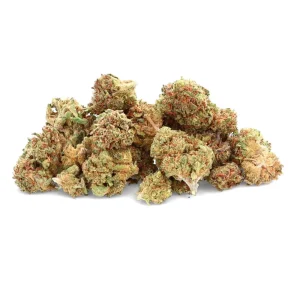
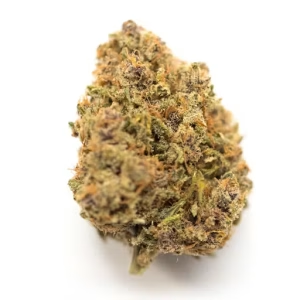
Fire OG is known for its classic OG appearance and aromatic character. Leafly describes Fire OG plants as producing frosty flowers with noticeable red-orange hairs, which contributes to the visual appearance associated with the name “Fire OG.”
Reported cultivation information also places its flowering period around 9–10 weeks, although cultivation times can differ according to phenotype, environment and growing method.
For a commercial product page, the actual appearance and cultivation characteristics should be treated as batch- or producer-specific rather than guaranteed from the strain name alone.
Fire OG Cannabinoid Information
Cannabinoid concentration should always be considered product-specific.
Some Fire OG products listed in strain databases have relatively high THC values, but those figures represent particular products or representative database information rather than a universal THC percentage for every Fire OG flower.
For Australian product listings, the appropriate approach is to use the cannabinoid information supplied with the specific product or batch. This avoids presenting a database estimate as a guaranteed laboratory result.
Fire OG vs Fire OG Kush
Fire OG and Fire OG Kush are commonly used as names for the same cultivar. Leafly lists Fire OG Kush as an alternative name for Fire OG.
However, cannabis naming is not always standardized across breeders and sellers. If a particular product is labeled Fire OG Kush, its breeder information or product documentation should be checked when exact genetics matter.
Fire OG should also not be confused with White Fire OG, which is a separate hybrid created from Fire OG and The White.
Fire OG Strain Australia
For people researching Fire OG strain Australia, general strain information should be separated from the specifications of a particular Australian product.
Different producers can cultivate different phenotypes or breeding lines under the same cultivar name. As a result, cannabinoid levels, terpene concentrations, flower appearance and aroma may differ.
Where laboratory or product documentation is available, it should be used for the most accurate information about the specific product.
Australian cannabis availability and lawful supply also depend on the current Australian regulatory framework and the classification of the particular product.
Frequently Asked Questions
What is the Fire OG strain?
Fire OG is a well-known OG-family cannabis cultivar commonly documented as a cross between OG Kush and SFV OG Kush. It is generally described as an indica-dominant hybrid.
What are the genetics of Fire OG?
The commonly documented genetics are OG Kush × SFV OG Kush.
Is Fire OG indica or sativa?
Fire OG is generally described as an indica-dominant hybrid, although some databases categorize it simply as a hybrid.
What does Fire OG smell like?
Fire OG is commonly associated with lemon, earthy and pine aromas, giving it a recognizable classic OG profile.
What are the main terpenes in Fire OG?
Leafly Certified data currently identifies myrcene as the dominant terpene, followed by limonene and caryophyllene.
Is Fire OG the same as Fire OG Kush?
Generally, yes. Fire OG Kush is listed as an alternative name for Fire OG.
Is Fire OG the same as White Fire OG?
No. White Fire OG is a separate cultivar created from Fire OG × The White.
Does Fire OG have a fixed THC percentage?
No. THC levels can vary between breeders, phenotypes, cultivation conditions and batches. The laboratory results for the specific product should be used when available.
| Quantity | Oz, Qp, Hp, 1 Pound |
|---|
Be the first to review “Fire OG Kush”
Related products
Flowers
Flowers
Reviews
There are no reviews yet.