
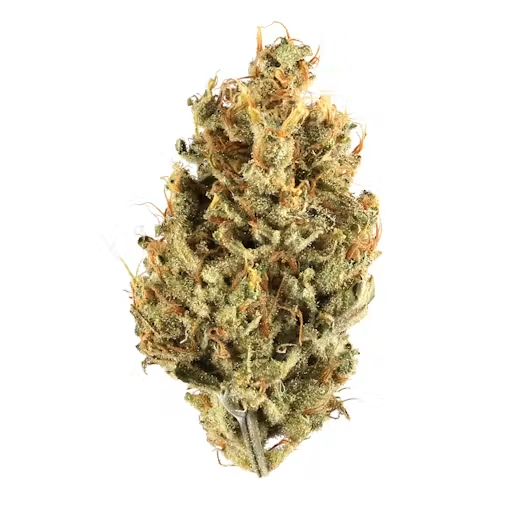
G13 strain
Price range: $250.00 through $2,300.00
The G13 strain is one of the most recognizable names in cannabis culture, particularly because of the unusual story surrounding its origins. Often written as G-13, the cultivar is generally associated with Afghan or Central Asian indica genetics and is known for an earthy, piney and hash-like aromatic profile.
Unlike many modern cannabis strains, the exact genetic history of G13 is not firmly established. The famous story claiming that G13 originated from a secret United States government cannabis research program remains part of cannabis folklore and has not been supported by publicly verified documentation. Current strain references instead describe G13 as an old-school Afghan indica selection or line with an uncertain genetic history.
G13 Strain Genetics
The genetics of the original G13 are not definitively documented.
Some modern references describe G13 as a pure Afghan indica or Afghan landrace-derived clone selection, while other commercially available G13 products may represent later reproductions or hybrids. This distinction is important because the name G13 is now used across different breeding lines.
The best-supported description is therefore that G13 has a strong Afghan indica genetic background, rather than assigning it a definitive two-parent cross.
The famous “Government Indica” story claims that G13 was selected from a government research program and later escaped into the cannabis community. However, the origin story remains unverified. What can be discussed more confidently is G13’s long association with Afghan-style indica genetics and its influence on later cannabis breeding.
G13 Strain Profile
G13 is generally associated with a traditional old-school indica profile.
Commonly reported characteristics include:
- Earth
- Pine
- Hash
- Herbal notes
- Musk
- Sweet and skunky undertones
- Woody characteristics
The overall aromatic character tends to be deeper and more earthy than the tropical, citrus or dessert profiles common among many newer cultivars.
This traditional profile is one reason G13 remains recognizable among cannabis enthusiasts researching older indica genetics.
G13 Terpene Profile
Terpenes are naturally occurring aromatic compounds that contribute to the smell and flavour characteristics of cannabis.
Myrcene is commonly identified as an important or dominant terpene associated with G13, contributing earthy, musky and herbal characteristics. Other terpenes commonly reported in G13 profiles include caryophyllene, limonene and pinene.
Their typical aromatic contributions include:
- Myrcene — earthy, herbal and musky notes
- Caryophyllene — peppery and spicy characteristics
- Limonene — citrus-like notes
- Pinene — pine and fresh woody aromas
The actual terpene composition can vary substantially between G13 phenotypes, breeders and individual batches. Exact percentages should therefore only be published when supported by laboratory results for the specific product.
G13 Aroma and Flavour
G13 is commonly associated with a deep earthy and pine-forward aroma, with hash-like, herbal and slightly skunky characteristics.
The flavour profile can similarly feature earthy and woody notes, sometimes accompanied by subtle sweetness, spice or citrus depending on the specific phenotype.
This gives G13 a distinctly traditional cannabis character that reflects its reported Afghan indica heritage.
G13 Characteristics
G13 is generally described as an indica-dominant cultivar, with some references categorizing the original line as essentially pure indica.
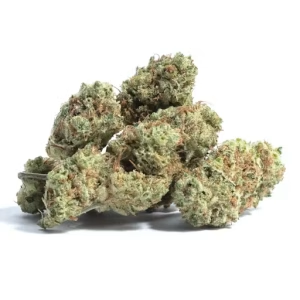
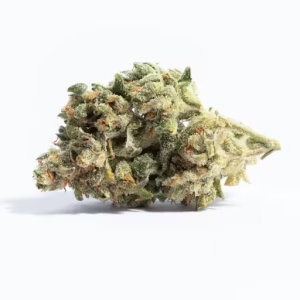
Descriptions of G13 commonly emphasize compact plant structure, dense flowers and substantial resin production. However, the physical appearance of a particular product can vary according to genetics, cultivation conditions, harvest timing and curing.
Because different commercial products can use the G13 name, characteristics should be treated as representative rather than guaranteed for every product carrying the name.
G13 and Cannabis History
G13 occupies an unusual place in cannabis history because its cultural reputation is closely connected to its mysterious origin story.
The popular legend claims that G13 was developed or selected within a United States government research facility before a cutting escaped into the underground cannabis community. However, available references do not provide verified government documentation establishing this story.
Neville Schoenmakers, an important figure in the early commercial cannabis seed industry, is associated with the early commercial introduction of a G13 cutting. G13 subsequently became part of breeding projects that produced several well-known G13 hybrids.
This history is important because the G13 name today can refer to both the original legendary cultivar and later breeding lines derived from G13 genetics.
G13 Descendants and Hybrids
G13 has been used in breeding projects involving other established cannabis genetics.
Examples associated with G13 include:
- G13 Haze
- G13 × Hash Plant
- G13 × Northern Lights
- G13 × Skunk
- XJ-13
These crosses demonstrate the influence that G13 genetics have had on later cannabis breeding.
It is important, however, to distinguish these hybrids from the original G13 name. A product labeled G13 Haze, for example, should not automatically be treated as genetically identical to G13 itself.
G13 Strain Australia
For people researching G13 strain Australia, it is important to distinguish general cultivar information from the specifications of an individual Australian cannabis product.
Different producers may use different G13 breeding lines, meaning genetics, cannabinoid concentration, terpene composition, flower appearance and other characteristics can vary.
Where available, batch-specific laboratory documentation should be used for exact THC, CBD and terpene values rather than relying on generic strain databases.
Australian cannabis products are also subject to applicable laws and regulatory requirements. Availability and lawful supply depend on the current Australian regulatory framework and the status of the particular product.
G13 Strain FAQs
What is the G13 strain?
G13 is a legendary cannabis cultivar generally associated with Afghan indica genetics and a long history in cannabis breeding. Its exact original genetics remain uncertain.
Is G13 an indica or sativa?
G13 is generally described as an indica or indica-dominant cultivar, with references commonly associating it with Afghan indica genetics.
What are the genetics of G13?
The exact genetics of the original G13 are not definitively established. It is commonly described as an Afghan indica or Afghan landrace-derived selection rather than a confirmed modern two-parent hybrid.
What does G13 smell like?
G13 is commonly associated with earthy, piney, herbal, musky and hash-like aromas, with some phenotypes showing skunky or sweet characteristics.
What are the main terpenes in G13?
Myrcene is commonly reported as an important or dominant terpene, with caryophyllene, limonene and pinene also reported in G13 profiles.
Is the G13 government origin story true?
The famous claim that G13 was developed inside a secret United States government cannabis research program has not been publicly verified. It is generally treated as cannabis folklore rather than established historical fact.
Does G13 have a fixed THC percentage?
No. THC concentration can vary between G13 breeding lines, growers and individual batches. The appropriate cannabinoid information for a specific product should come from its laboratory or product documentation.
Is G13 the same as G13 Haze?
No. G13 and G13 Haze are separate cultivar names. G13 Haze is a hybrid involving G13 genetics and Haze-related genetics, so it should not automatically be treated as the original G13 cultivar.
What makes G13 distinctive?
G13 is particularly recognizable for its mysterious history, Afghan indica association and earthy, piney and hash-like aromatic profile. Its genetics have also contributed to numerous later cannabis hybrids.
| Quantity | Oz, Qp, Hp, 1 Pound |
|---|
Be the first to review “G13 strain”
Related products
Flowers
Flowers
Flowers
Flowers
Flowers
Reviews
There are no reviews yet.