
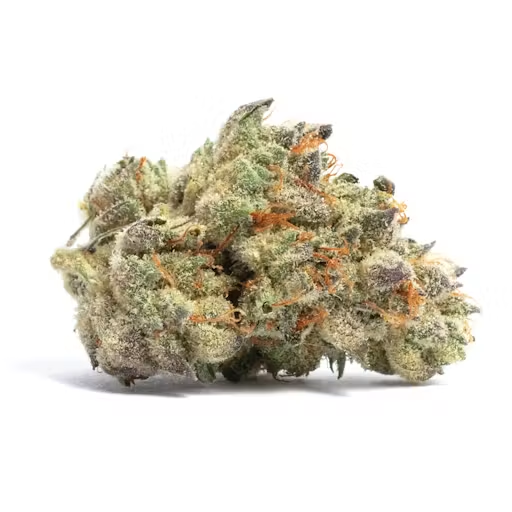
Purple Haze Strain
Price range: $270.00 through $2,500.00
The Purple Haze strain is a classic cannabis cultivar associated with the Haze family and recognized for its distinctive purple colouring, berry-forward aroma and sativa-dominant genetic profile. It is commonly described as a cross of Purple Thai and Haze, giving it a combination of sweet fruit characteristics and the earthy, aromatic qualities associated with Haze genetics.
The name Purple Haze is also closely connected to music history through Jimi Hendrix’s famous 1967 song, although the cannabis cultivar and the song are separate subjects.
Purple Haze Strain Genetics
The commonly reported genetics of Purple Haze are:
Purple Thai × Haze
Sensi Seeds describes its Purple Haze line as a cross between Haze and a selected Purple Thai phenotype, while Leafly also identifies Purple Thai and Haze as the parent strains.
Purple Thai contributes to the cultivar’s distinctive berry and colourful characteristics, while Haze genetics are associated with its sativa-dominant structure and traditional earthy, aromatic profile.
Because the Purple Haze name has been used by different breeders, genetic expression can vary between products. Specific breeder documentation should therefore take priority when identifying a particular Purple Haze line.
Purple Haze Strain Profile
Purple Haze is generally categorized as a sativa or sativa-dominant cultivar. Leafly currently classifies it as a sativa, while Sensi Seeds describes its Purple Haze line as approximately 80% sativa and 20% indica.
Commonly associated characteristics include:
- Berry
- Floral
- Violet
- Sweet
- Earthy
- Spicy
- Tangy or citrus-like notes
Leafly currently lists lavender, flowery and violet among the leading flavour descriptions, while Sensi Seeds highlights sweet-and-sour, berry and earthy Haze characteristics.
Purple Haze Aroma and Flavour
The aroma of Purple Haze is one of the cultivar’s most recognizable features.
A classic Purple Haze profile combines sweet berry and floral notes with earthy Haze characteristics. Depending on the phenotype, additional spicy, tangy or citrus-like notes may also be present.
The flavour commonly follows a similar pattern, beginning with sweet fruit and berry characteristics before developing into deeper earthy and herbal notes.
This combination gives Purple Haze a profile that is noticeably different from modern dessert-focused cultivars.
Purple Haze Terpene Profile
Current Leafly Certified data identifies myrcene as the dominant terpene in Purple Haze, followed by caryophyllene and limonene.
Myrcene
Myrcene is commonly associated with earthy, herbal and musky aromas and contributes to the deeper side of the Purple Haze profile.
Caryophyllene
Caryophyllene is associated with peppery and spicy aromatic characteristics, adding complexity to the cultivar’s sweet and floral notes.
Limonene
Limonene contributes citrus-oriented aromas and can complement the berry and tangy characteristics reported for Purple Haze.
Terpene concentrations can differ between phenotypes, growers and batches. Exact percentages should therefore only be published when supported by laboratory testing for the specific product.
Purple Haze Appearance
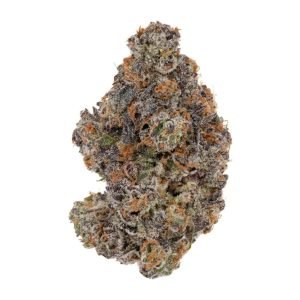
Purple Haze is particularly recognizable for the possibility of violet or purple coloration in its flowers. Sensi Seeds describes its Purple Haze line as producing distinctive purple-coloured flowers, while Leafly notes that the buds can develop vibrant lavender hues.
Colour expression is not guaranteed in every plant carrying the Purple Haze name. Genetics, environmental conditions and temperature during flowering can influence how strongly purple pigments appear.
Consequently, a green or partially purple flower can still be correctly identified as Purple Haze depending on its genetics.
Purple Haze Cultivation Characteristics
Different Purple Haze lines can have different cultivation characteristics.
Sensi Seeds describes its Purple Haze Feminized line as having a relatively short flowering period of approximately 50–65 days, while Leafly’s growing information places Purple Haze around the 7–9 week flowering range.
The cultivar is generally associated with manageable height compared with some longer-flowering Haze varieties, although plant structure and flowering time depend on the particular genetics and growing environment.
For a commercial product page, these figures should be treated as general cultivar information rather than guaranteed specifications for every Purple Haze product.
Purple Haze Cannabinoid Information
There is no single THC or CBD concentration that applies to every Purple Haze product.
Leafly currently displays a representative THC figure for its Purple Haze listing, while individual breeder products can publish different cannabinoid specifications.
For this reason, a specific product’s laboratory or batch documentation should be used whenever exact THC, CBD or other cannabinoid values are required.
Avoid assuming that a database percentage represents the actual cannabinoid concentration of a particular batch.
Purple Haze Strain Australia
For people searching for Purple Haze strain Australia, the cultivar’s general genetics and terpene characteristics can provide useful background, but individual products may differ.
Different breeders and producers can work with different Purple Haze lines, resulting in variation in cannabinoid concentration, terpene composition, flower appearance and aroma.
For Australian products, the product’s current documentation should therefore be considered the appropriate source for exact specifications. Availability and lawful supply also depend on Australia’s current cannabis laws and regulatory framework.
Purple Haze vs Other Haze Strains
Purple Haze belongs to the broader Haze family but should not automatically be treated as identical to other Haze cultivars.
For example, Haze, Amnesia Haze, Super Silver Haze and Silver Haze have different breeding histories and genetic compositions.
Purple Haze is particularly distinguished by its association with Purple Thai × Haze genetics and its characteristic berry, floral and violet-oriented profile.
This distinction is useful when comparing cannabis cultivars based on genetics rather than simply their names.
Frequently Asked Questions
What is the Purple Haze strain?
Purple Haze is a classic sativa-dominant cannabis cultivar commonly associated with Purple Thai and Haze genetics.
Is Purple Haze indica or sativa?
Purple Haze is generally classified as a sativa or sativa-dominant cultivar.
What are the genetics of Purple Haze?
The commonly documented genetics are Purple Thai × Haze. Different breeders may work with their own versions, so specific product documentation should be checked when exact lineage matters.
What does Purple Haze smell like?
Purple Haze is commonly associated with sweet berry, floral, violet, earthy and spicy aromas.
What are the main terpenes in Purple Haze?
Current Leafly Certified data lists myrcene as the dominant terpene, followed by caryophyllene and limonene.
Does Purple Haze always have purple buds?
No. Purple coloration can vary between plants and growing conditions. Purple Haze genetics can produce violet or lavender flowers, but not every plant will display the same intensity of colour.
Is Purple Haze the same as Haze?
No. Purple Haze is a distinct cultivar associated with Purple Thai and Haze genetics. The broader Haze family contains numerous other cultivars with different genetic backgrounds.
Does Purple Haze have a fixed THC percentage?
No. THC and CBD concentrations can vary between breeders, phenotypes and batches. The laboratory results for the specific product should be used for exact cannabinoid information.
| Quantity | Oz, Qp, Hp, 1 Pound |
|---|
Be the first to review “Purple Haze Strain”
Related products
Flowers
Flowers
Reviews
There are no reviews yet.