
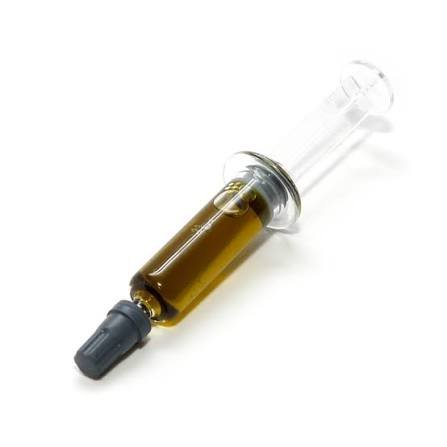
Rick Simpson Oil (RSO)
Price range: $400.00 through $800.00
Rick Simpson Oil (RSO) is a concentrated cannabis extract named after Canadian cannabis activist Rick Simpson, who popularised the preparation and use of a highly concentrated cannabis oil in the early 2000s. The term “RSO” is now commonly used to describe cannabis extracts made in a similar style, although products sold under the RSO name can differ considerably in cannabinoid concentration, extraction method and formulation.
What Is Rick Simpson Oil?
Rick Simpson Oil is generally described as a highly concentrated cannabis extract containing cannabinoids and other cannabis constituents. Traditional RSO preparations are typically associated with cannabis flower being processed into a dark, viscous oil.
Unlike a specific cannabis cultivar, RSO does not have one universal cannabinoid or terpene profile. The composition depends on factors such as:
- The cannabis material used
- Cultivar genetics
- Cannabinoid concentration
- Extraction process
- Refinement and filtration
- Storage conditions
- The final formulation
For this reason, the name RSO alone does not establish a specific THC or CBD percentage.
Rick Simpson Oil History
RSO takes its name from Rick Simpson, who became known for making and promoting a concentrated cannabis oil preparation after his own experiences with cannabis extracts.
The term subsequently became widely used online and within cannabis communities to describe concentrated cannabis oils made using similar approaches.
It is important to separate the historical story surrounding RSO from scientifically established evidence. Claims made online about RSO’s potential effects or medical applications are not automatically evidence of clinical efficacy.
RSO Cannabinoid Profile
Traditional RSO is generally associated with a THC-dominant cannabinoid profile, although products described as RSO can vary substantially.
The cannabinoid composition can include:
- THC
- THCA
- CBD
- CBDA
- CBG
- CBC
- Other minor cannabinoids
The exact profile depends on the starting plant material and processing method.
A product should therefore be evaluated using its own laboratory or manufacturer documentation rather than assuming that all RSO contains the same cannabinoid concentrations.
RSO and Full-Spectrum Extracts
RSO is often described as a full-spectrum or whole-plant cannabis extract, but terminology is not completely standardised.
“Full-spectrum” generally refers to an extract retaining multiple naturally occurring cannabis constituents rather than isolating a single cannabinoid. However, the actual composition depends on how the extract was produced.
Two products can therefore both be marketed as RSO while having substantially different cannabinoid and terpene profiles.
RSO Terpene Profile
There is no universal RSO terpene profile.
Terpenes present in an RSO preparation depend largely on the cannabis cultivar and extraction process. Potentially reported cannabis terpenes can include:
- Myrcene
- Limonene
- Beta-caryophyllene
- Alpha-pinene
- Humulene
- Linalool
Some extraction processes may significantly alter or remove volatile terpene compounds. Consequently, terpene information should only be attributed to a particular RSO product when supported by its laboratory analysis or manufacturer documentation.
RSO Appearance and Characteristics
Traditional RSO is commonly recognised by its dark colour and thick, viscous consistency. The appearance can range from dark brown to nearly black depending on the plant material and extraction process.
Colour alone, however, cannot establish cannabinoid potency, purity or quality.
Other characteristics can vary considerably, including:
- Viscosity
- Aroma
- Colour
- Cannabinoid concentration
- Terpene content
- Residual compounds
- Extraction-related impurities
A laboratory analysis is therefore more useful than appearance when assessing the composition of a cannabis extract.
RSO vs Cannabis Oil
The terms RSO, cannabis oil, THC oil, and full-spectrum cannabis extract are sometimes used interchangeably online, but they do not necessarily describe identical products.
Cannabis oil is a broad term covering many different formulations. Some products may contain isolated cannabinoids, while others contain broader plant extracts.
RSO generally refers to a particular style of concentrated cannabis extract associated with Rick Simpson’s preparation, rather than a single standardised pharmaceutical formulation.
RSO in Australia
Australian consumers should take particular care when researching or purchasing products described as RSO.
The Therapeutic Goods Administration states that advertising prescription medicines, including medicinal cannabis, to the Australian public is prohibited except in limited circumstances. The TGA’s current guidance also makes clear that indirect references and colloquial terms can fall within the advertising restrictions.
The TGA has previously taken enforcement action involving unlawful advertising of cannabis-related products and has warned about products marketed as hemp or cannabis oils containing undeclared cannabinoids.
Accordingly, an Australian-facing RSO information page should focus on education, terminology, composition and regulatory context, rather than promoting RSO for particular medical conditions or encouraging consumers to obtain or use an unapproved product.
RSO and Medical Claims
RSO is frequently discussed online in connection with serious medical conditions. Those discussions should not be confused with established clinical evidence or Australian therapeutic indications.
The TGA has specifically warned against advertising medicinal cannabis with claims that products can treat serious diseases without the required authorisation.
For this reason, this page does not present RSO as a treatment or cure for cancer, epilepsy, pain, anxiety, insomnia or other medical conditions.
Anyone considering cannabis-based treatment in Australia should discuss appropriate options with a qualified healthcare professional.
Frequently Asked Questions
What does RSO stand for?
RSO stands for Rick Simpson Oil, a concentrated cannabis extract named after Rick Simpson, who popularised the preparation.
Is RSO the same as cannabis oil?
Not necessarily. Cannabis oil is a broad term covering many different cannabis-derived oils and extracts, while RSO generally refers to a particular style of concentrated cannabis extract.
What cannabinoids are found in RSO?
RSO can contain THC, THCA, CBD, CBDA, CBG and other cannabinoids. The exact profile depends on the cannabis material and extraction process.
Does RSO always contain THC?
Traditional RSO is generally associated with THC-rich cannabis extracts, but products sold using the RSO name can vary. The actual cannabinoid profile should be confirmed using product-specific laboratory information.
What does RSO look like?
Traditional RSO is usually a dark, thick and viscous oil. Appearance can vary according to the starting material and extraction process.
What are the terpenes in RSO?
There is no single terpene profile for RSO. Terpenes depend on the cultivar and extraction method. Product-specific laboratory testing is the appropriate source for exact terpene information.
Is RSO legal in Australia?
The legal status of a particular cannabis extract depends on its formulation, cannabinoid content, intended use, supply pathway and applicable Australian laws. RSO should not be assumed to be an ordinary over-the-counter product.
Can RSO be advertised in Australia?
Australian advertising restrictions are significant for medicinal cannabis and prescription medicines. The TGA states that medicinal cannabis cannot generally be advertised to the public, and indirect or colloquial references can also be relevant to the rules.
Is RSO a specific cannabis strain?
No. RSO is an extract type/name, not a cannabis strain. Different cannabis cultivars can be used to produce extracts described as RSO, resulting in different cannabinoid and terpene profiles.
| Quantity | 5 Syringe, 10 Syringe |
|---|
Be the first to review “Rick Simpson Oil (RSO)”
Related products
Extracts
Extracts
Extracts
Extracts
Reviews
There are no reviews yet.